Compression Stockings for Everyday Leg Support: 3 Styles to Consider
Compression stockings might not be the first thing you think of when it comes to everyday wellness, but they can be incredibly practical. Whether you spend hours sitting at a desk, stand for long periods, travel frequently, or simply want extra support for tired legs, the right pair can make a difference in how your legs feel throughout the day.
Compression stockings come in different lengths, compression levels, and toe styles, so finding the right option depends on your comfort and needs.
Here are three compression stocking styles to consider, including knee-high, thigh-high, open-toe, and closed-toe options.
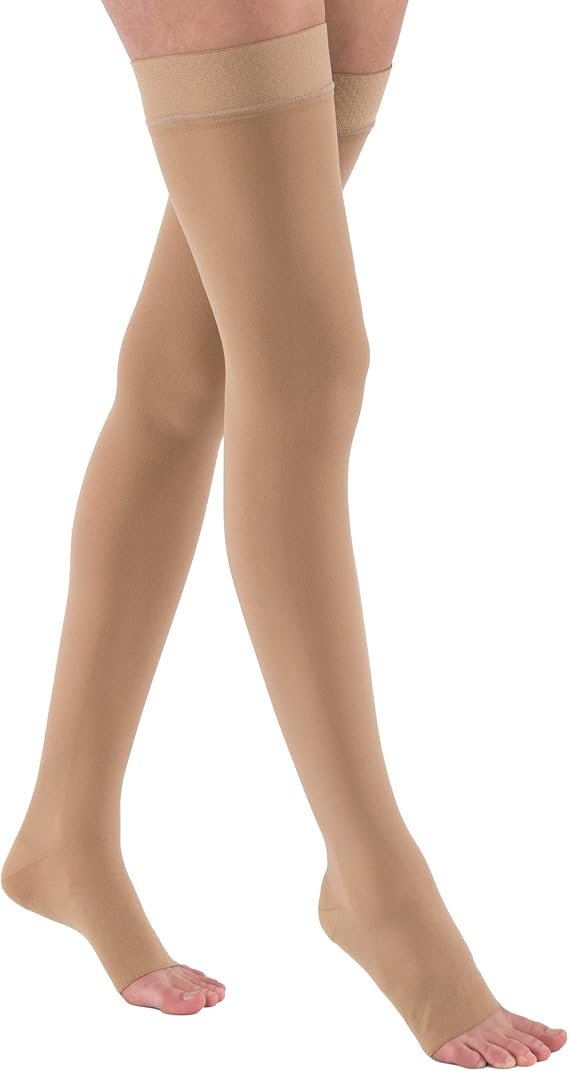
Thigh-High Open-Toe Compression Stockings
Thigh-high open-toe compression stockings provide coverage from the foot up through the thigh while leaving the toes exposed.
The open-toe design can be especially convenient if you prefer having more room around your toes or want to wear compression stockings with certain shoes.
Thigh-high styles also provide compression beyond the lower leg, making them an option for people looking for more coverage than a traditional knee-high sock.
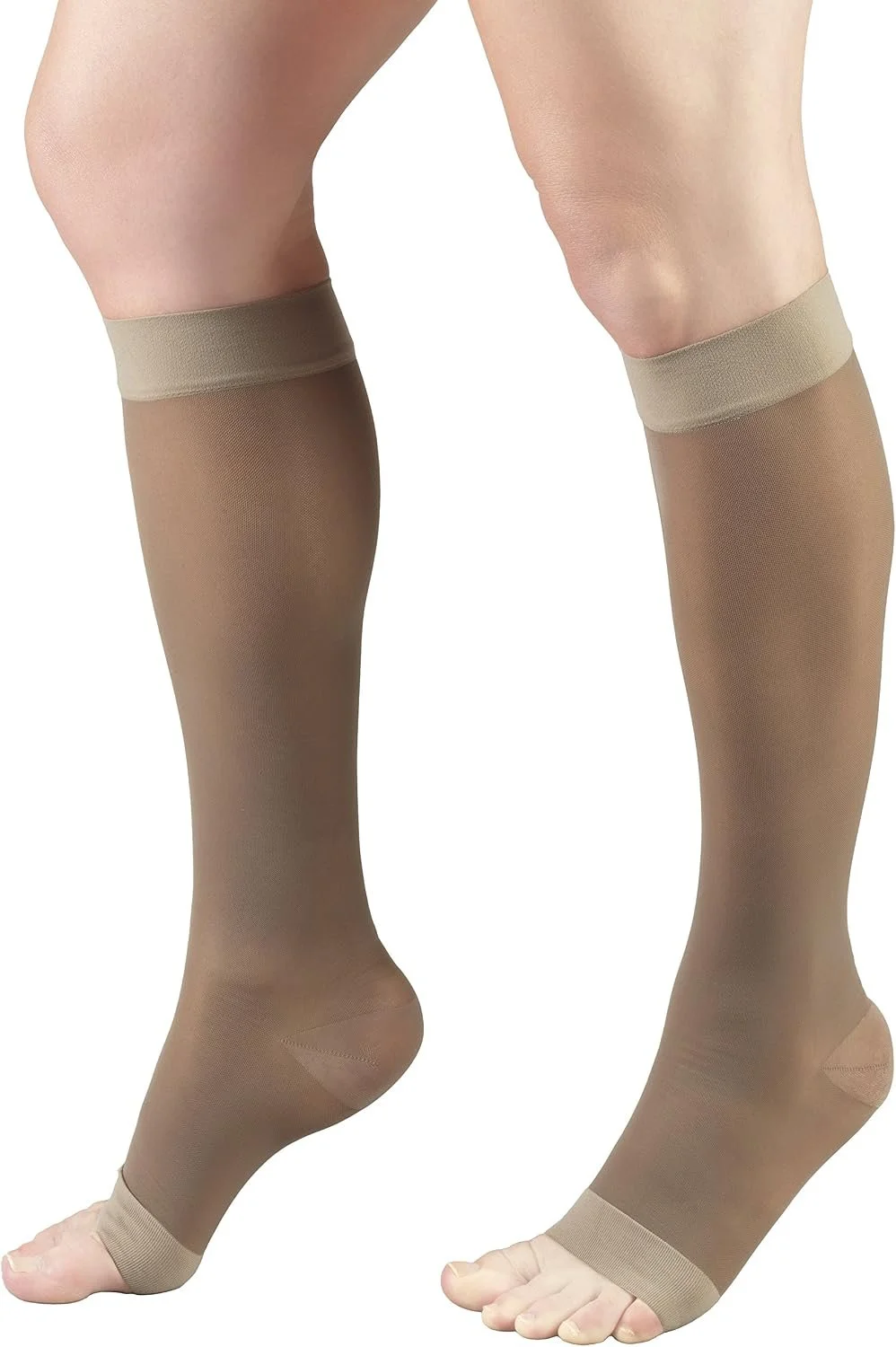
Knee-High Open-Toe Compression Socks
For something simple and practical for everyday wear, knee-high open-toe compression socks are worth considering.
They provide compression from the foot through the lower leg while stopping just below the knee. Because they don't extend onto the thigh, they can also be easier to wear underneath everyday clothing.
Knee-high compression socks can be convenient for:
Long days at a desk
Jobs that require prolonged standing
Flights and road trips
Everyday leg support
People who prefer less coverage
The open-toe design also gives your toes more freedom than a traditional closed-toe compression sock.
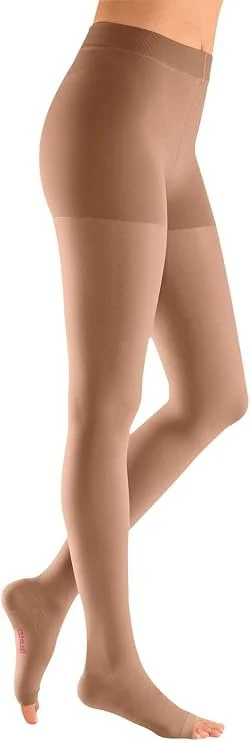
Thigh-High Closed-Toe Compression Stockings
If you prefer complete coverage, thigh-high closed-toe compression stockings cover the entire foot and extend up the leg to the thigh.
The closed-toe design feels more similar to traditional hosiery and may be preferable during cooler months or when wearing closed shoes.
Many thigh-high styles also feature bands designed to help keep the stockings securely in place throughout the day.
What Do Compression Stockings Do?
Compression stockings are designed to apply controlled pressure to the legs. Many use graduated compression, meaning the pressure is generally strongest near the ankle and gradually decreases farther up the leg.
This design supports blood flow through the legs and may help with swelling or feelings of tiredness and heaviness.
Compression stockings are commonly used by people who spend extended periods sitting, standing, working, or traveling. They may also be recommended by healthcare professionals for certain medical or recovery needs.
Knee-High vs. Thigh-High Compression Stockings
Choosing between knee-high and thigh-high stockings largely depends on the amount of coverage you need.
Knee-high compression socks are convenient for everyday use and easy to conceal underneath pants. If you're new to compression wear, they can also be an approachable place to start.
Thigh-high compression stockings provide compression farther up the leg and may be preferable when additional coverage is needed or recommended.
There isn't one style that's best for everyone. Comfort, fit, compression strength, and the reason you're wearing them should all factor into your decision.
Open-Toe vs. Closed-Toe Compression Stockings
Another decision is whether you want your toes covered.
Open-toe compression stockings leave the toes exposed. They can feel less restrictive and may work well with certain footwear.
Closed-toe compression stockings cover the entire foot and may feel more like a traditional sock or stocking. They can also provide a little more warmth during cooler weather.
Ultimately, this choice often comes down to personal preference unless your healthcare provider has recommended a particular style.
Understanding Compression Levels
When shopping for compression stockings, you'll probably notice numbers followed by mmHg, or millimeters of mercury. This measurement represents the amount of compression provided.
Different compression levels are intended for different purposes, and more compression isn't necessarily better.
If you're purchasing compression stockings specifically for a medical condition, significant swelling, circulation concerns, or recovery after a procedure, talk with your healthcare provider about the appropriate compression level before choosing a pair.
What to Look for When Shopping for Compression Stockings
Fit and comfort are especially important with compression garments. Before purchasing, check the manufacturer's sizing chart rather than assuming your usual sock or clothing size will be the best fit.
You may also want to look for breathable material, a comfortable upper band, the appropriate compression level, and a length and toe style that work with your everyday routine.
Neutral shades such as beige, nude, brown, and black can also make compression stockings easier to incorporate into your wardrobe without drawing attention to them.
Finding the Right Compression Stockings for You
Compression stockings are one of those simple wellness products that can be easy to overlook. But for people who experience tired legs, travel frequently, sit for extended periods, or spend much of the day on their feet, having a comfortable pair on hand can be useful.
Whether you prefer knee-high, thigh-high, open-toe, or closed-toe compression stockings, focus on finding an option that fits properly and provides the appropriate level of compression for your needs.
Shop the compression stockings featured above to find the style that works best for you.
Affiliate Disclosure: This post contains affiliate links. PHYN Wellness may earn a small commission from qualifying purchases at no additional cost to you.
Health Disclaimer: This content is for general informational purposes only and is not intended to diagnose, treat, cure, or prevent any medical condition and should not be considered medical advice. Consult a qualified healthcare professional if you have questions about compression stockings, circulation, swelling, or your individual health needs.